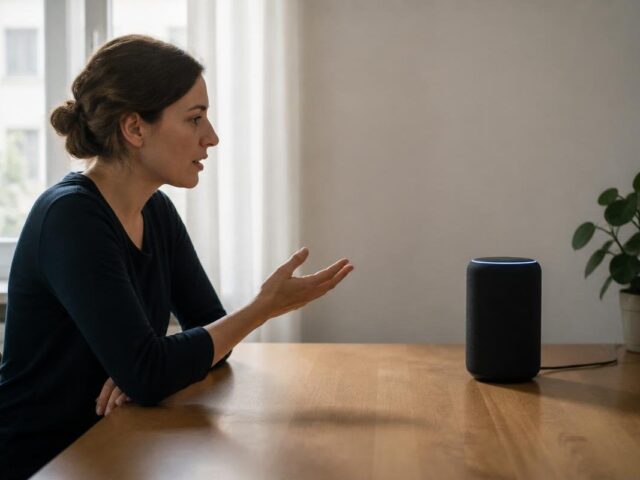


Real talk: I have never wanted an assistant that just sat there. You know the feeling — you open the app, stare at the blinking cursor, and think, “Okay, I have to remember everything I wanted to do today and type it all out.” That’s been the deal with every AI tool so far. You talk first. You remember the thing. You do the follow-up.
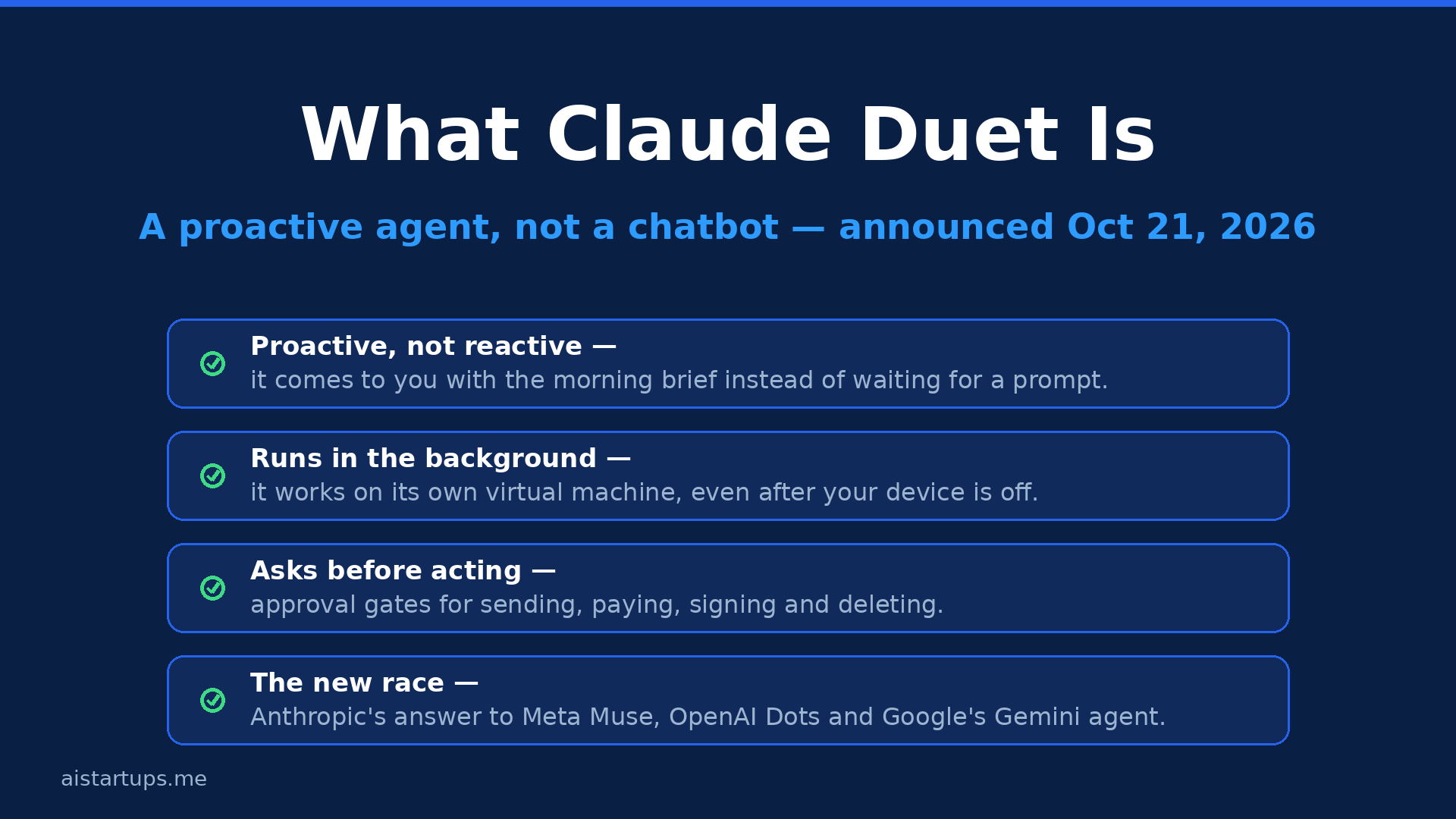
Anthropic just flipped that. On October 21, 2026, they launched Claude Duet as a research preview — a proactive AI agent that, in their own words from the launch announcement, “comes to you with what needs your attention, completes tasks you ask of it, keeps working when you step away, and checks with you before it acts on your behalf.”
Read that again. It comes to you. That’s the whole shift, and honestly, for a founder wearing nine hats at 7 a.m., it might be the first AI product that actually matches how a small business works: stuff happens, somebody has to notice, and that somebody is usually you — until now.
I spent the last day reading everything Anthropic published about Duet, plus the early hands-on coverage, so you don’t have to. Here’s what it is, what it can actually do for your startup, how to get on the waitlist today, and — because I don’t do hype without receipts — the caveats that matter before you hand a machine your inbox and your invoices.
What Claude Duet Actually Is
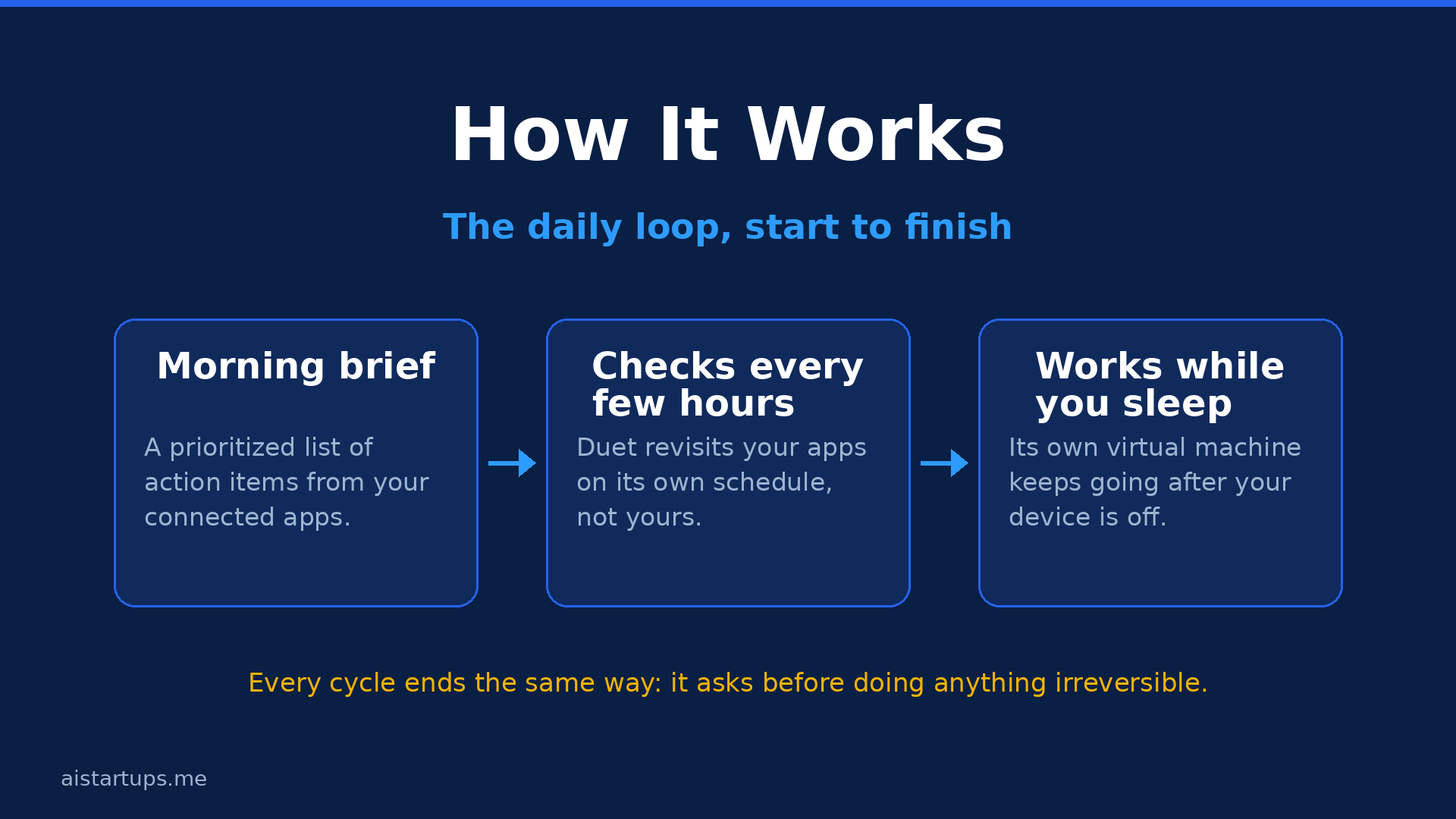
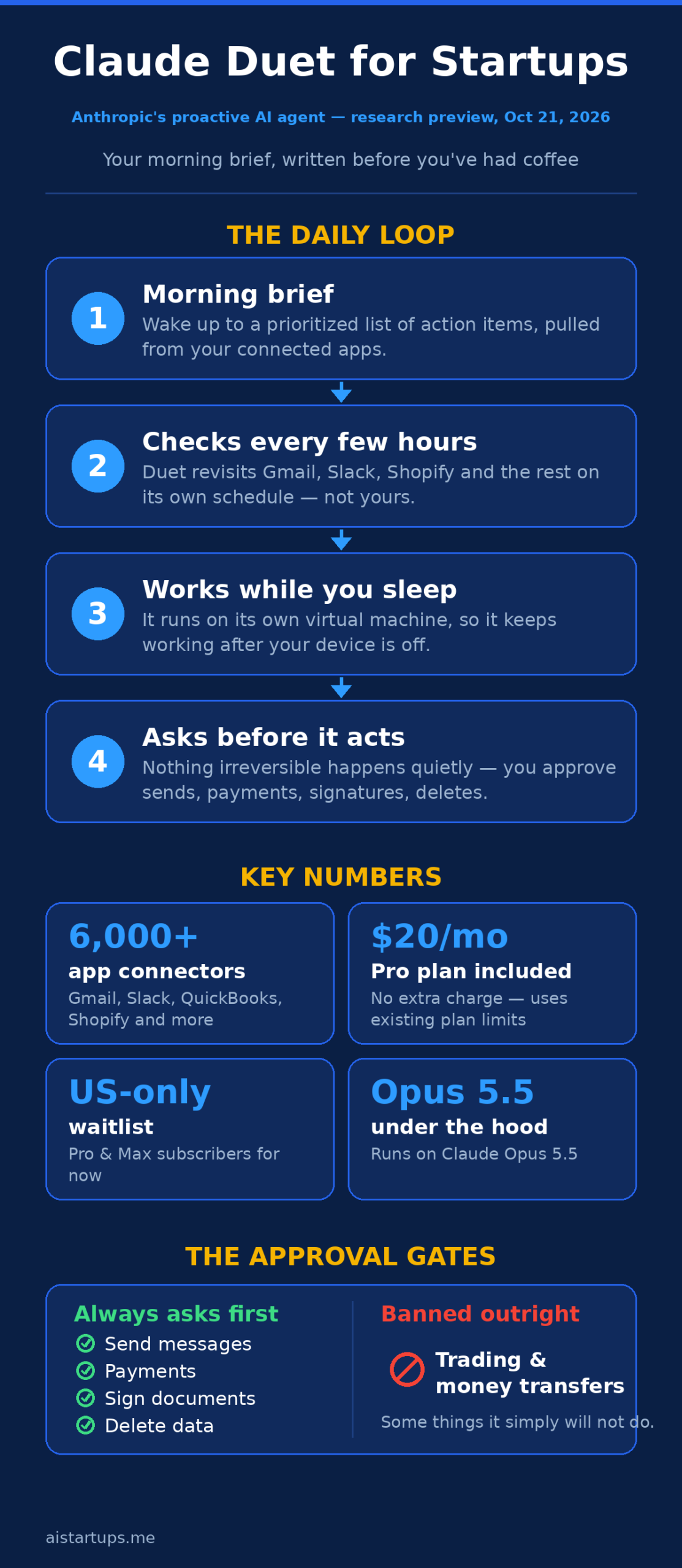
The short version: Duet is a separate app from Claude — standalone iOS and Android apps, plus web access through claude.ai — built around a simple premise. Instead of waiting for your prompt, it proactively does three things: it sends you a short morning brief of action items drawn from your connected apps, it keeps running tasks in the background after you give them, and it checks with you before acting on your behalf.
Under the hood, Anthropic says it runs on its own virtual machine with its own browser, and it keeps working after you close your laptop or switch off your phone. Ask it to research something at 9 p.m., fall asleep, and the work is there in the morning. That alone puts it in a different category than a chatbot tab you forgot to refresh.
Setup is deliberately light. It carries over the memory, skills, and connected apps from your existing Claude account, and the whole relationship lives in one ongoing thread. No reconfiguring integrations, no re-teaching it who your customers are. For a founder, that low-friction onboarding is a big deal — the last thing you need is another “spend your Sunday connecting accounts” project.
The brain: Claude Opus 5.5
Duet is built around Claude Opus 5.5, Anthropic’s flagship model released late September 2026. Why that model? Per Mike Krieger, co-lead of Anthropic Labs, it was chosen for its judgment — its discernment about when to be proactive and when to ask for approval. That’s a meaningful choice. The failure mode of a proactive agent isn’t that it’s dumb; it’s that it’s confidently proactive about the wrong thing at 3 a.m. Anthropic is saying the flagship’s job here is restraint as much as capability. Well — we’ll see, but at least they’re aiming at the right problem.
How the Morning Brief and Proactive Checks Work
This is the feature I keep coming back to, because it’s the one that maps directly onto founder life. Every morning, Duet sends a short brief of action items pulled from your connected apps — email, Slack, calendar, the usual suspects. Not a generic digest. Action items. The unpaid invoice from Thursday. The email from that prospect that needed a reply. The meeting today with no agenda.
Between briefs, it checks your apps every few hours and messages you only when something needs attention. That restraint matters more than it sounds. The graveyard of startup tools is full of notification-happy apps founders muted within a week. Anthropic’s explicit pitch is that Duet pings you only when it matters — a filter, not a firehose.
Here’s how that plays out in practice across a founder’s day:
- Morning: the brief lands with your action items — meetings, overdue invoices, hot threads in Slack, anything that arrived overnight.
- Midday: background checks every few hours; a ping if a prospect replies, an invoice goes past due, or a meeting conflict appears.
- Evening: hand it something long-running — research, a dashboard build, a draft — and it keeps working after you close the lid.
- Always: one ongoing thread, so context carries across days without you re-explaining yourself.
The connective tissue is the Claude Marketplace — Anthropic says it holds 6,000+ connectors and plugins, including Gmail, Slack, QuickBooks, Gusto, DocuSign, HubSpot, Shopify, LinkedIn, and Stripe. That’s your actual stack. Not toy integrations. QuickBooks and Gusto mean real financial plumbing; HubSpot and Shopify mean the revenue side; DocuSign means the legal side. A proactive agent is only as useful as the apps it can see, and on paper, Duet can see the ones that run your business.
The Approval Gates: Why This Might Actually Earn Founder Trust
Okay, here’s the thing. A proactive AI with access to your email, your QuickBooks, and your payment tools is either the best hire you ever made or a disaster movie. Anthropic clearly thought about this, because the safety design reads like it was written by people who’ve seen what goes wrong.
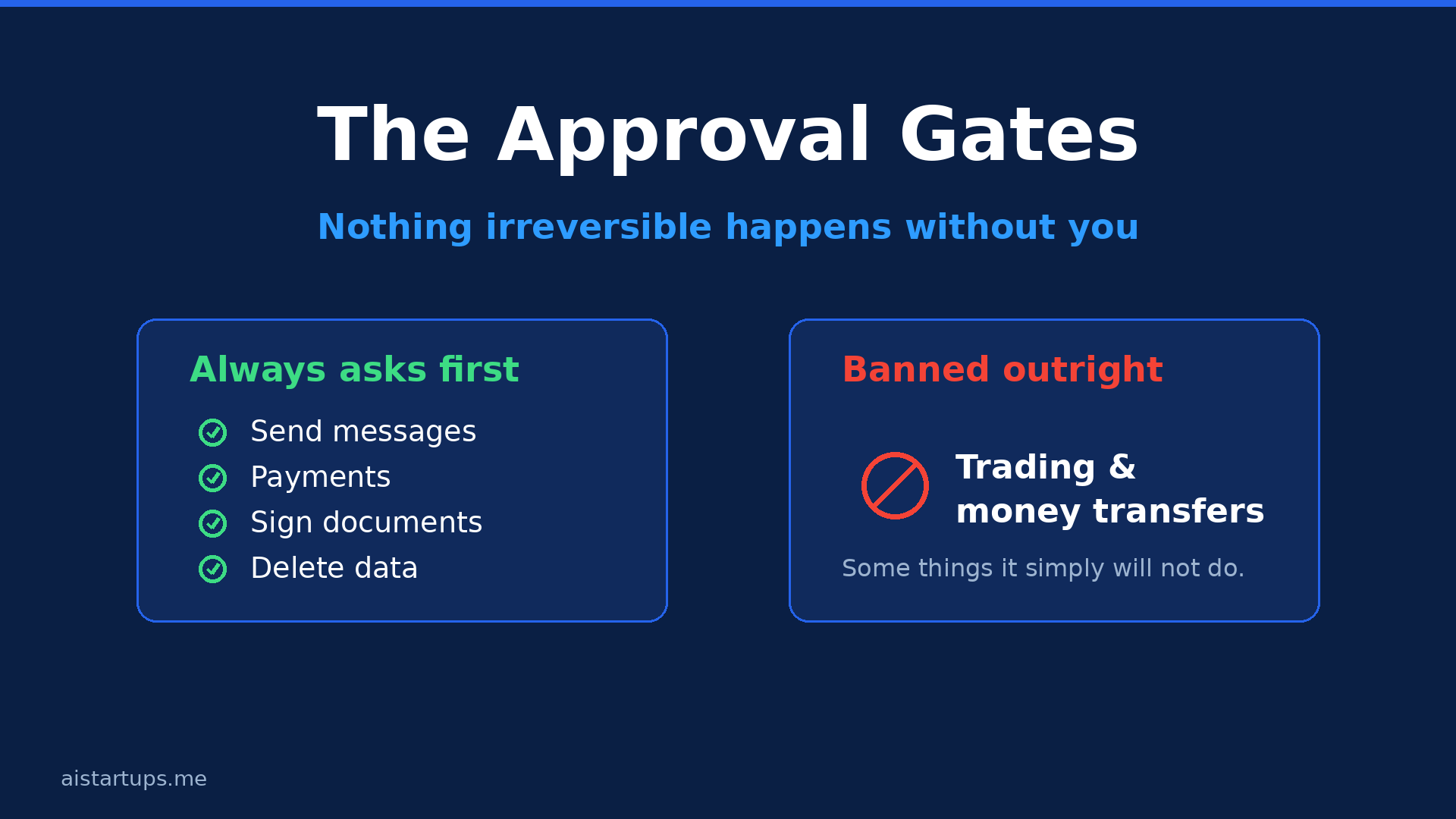
Duet asks your permission before:
- Sending messages on your behalf
- Making payments
- Signing documents
- Deleting files
And — this is the line that caught my eye — securities trading and fund transfers are prohibited entirely, even with user approval. Not “allowed with confirmation.” Prohibited. Full stop. For anyone who’s watched an AI agent hallucinate its way through a sensitive task, that hard boundary is genuinely reassuring.
On privacy, Anthropic says Duet doesn’t see passwords or logins when given account access, and a dedicated classifier plus a safety system prompt checks each message to guard against sensitive-information leaks. Purchases flow through Stripe’s Link wallet and Shopify’s Shop Pay, which keeps the money-handling inside established rails rather than inside the agent’s free-form judgment.
“It comes to you with what needs your attention, completes tasks you ask of it, keeps working when you step away, and checks with you before it acts on your behalf.” — @claudeai, announcing Claude Duet on X
Look, vendor claims are vendor claims — “Anthropic says” is doing a lot of work in this whole section, and you should read it that way. But the shape of the design is right: proactive where it should be proactive (noticing, briefing, drafting), gated where it should be gated (sending, paying, signing, deleting). If you’re going to hand an AI the keys to your business ops, that’s the shape you want.
7 Concrete Ways Founders Can Use It
Enough theory. Here’s what I’d actually put Duet on, based on the task examples Anthropic and early coverage describe:
1. The morning brief, minus the scroll
The killer feature for solo founders. Instead of opening four apps and doing mental triage for twenty minutes, you get one short message: here’s what needs you today. The difference between a founder who starts the day reacting and one who starts it deciding is worth real money.
2. Invoice chasing (the task nobody does)
Anthropic names “investigating unpaid invoices” as an example. Duet can spot a past-due invoice in QuickBooks, pull the thread, draft the follow-up, and ask you before sending. Overdue receivables kill more startups than bad ideas. A polite, relentless, automatic nudge machine has direct ROI.
3. Meeting scheduling without the ping-pong
Scheduling is one of the listed examples, and with calendar + email + Slack connected, Duet can do the whole dance: find the slot, draft the invite, check with you. A small thing, but those small things are what eat a founder’s calendar alive.
4. Dashboards and forecasts on demand
“Building dashboards” and “financial/sales forecasts” are both named task types. Picture asking for a weekly revenue snapshot or a burn-rate forecast on a Sunday night and waking up to it. For pre-finance-team startups, that’s the difference between flying blind and flying with instruments.
5. Lead follow-up drafts
Drafting customer follow-ups is a listed example. Duet watches the pipeline (HubSpot), notices the cold lead from last week, drafts a follow-up, asks you before sending. Follow-up is where deals actually die — not in the pitch, in the silence after.
6. Prototyping and web apps
Duet can prototype and build web apps — hand it a sketch of an idea and get a working prototype back. That’s a genuine superpower for testing landing pages, internal tools, or MVP concepts before committing real dev budget. And when the prototype proves the idea and you need it built properly, an AI integration studio like AISquadX can take it from weekend experiment to production-grade product.
7. Research that runs while you sleep
The “keeps working when you step away” angle is perfect for deep research: competitor analysis, pricing benchmarks, market sizing. Assign it at night, review the brief in the morning. It’s the closest thing to hiring a night-shift analyst you don’t have to manage.
Pricing and Eligibility: The Fine Print
Here’s where founders should pay attention, because the pricing is both generous and limited.
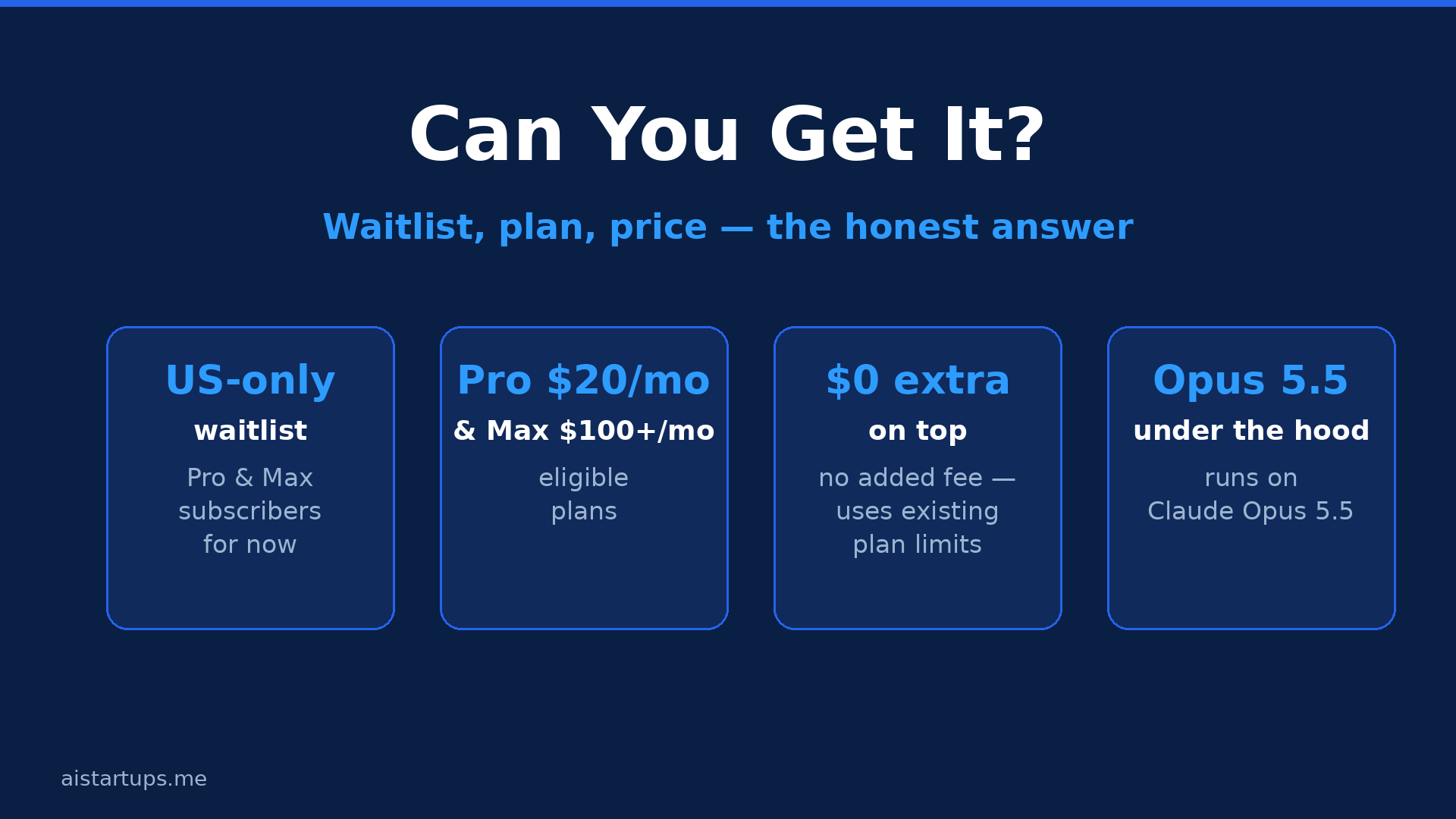
There’s no separate price for Duet. It’s included in Claude Pro ($20/month) and Max (starting at $100/month). Background checks and tasks count against your existing plan limits, and usage is shared across all Claude tools, including Claude Code. So it’s “free” — but your heavy Duet usage eats the same quota as your coding sessions. Heavy users should budget accordingly.
Eligibility is narrow for now: US-only, Claude Pro and Max subscribers, via a waitlist. Team and Enterprise plans are excluded for now, and there’s no announced date for international expansion. If you’re outside the US or on a team plan, you’re waiting — period. The product lead, Karan Ahuja (who joined Anthropic in August from Meta’s Superintelligence Labs, where he led product for Muse), says the waitlist is being admitted “as quickly as possible.” Read that as: demand is real, onboarding is gated, patience required.
The whole thing is a research preview, and Anthropic is upfront about the rough edges: it may misread a thread, misjudge urgency, or miss something that arrives between checks. That’s not marketing fluff — that’s the actual failure mode of a proactive agent, and they’re naming it. Respect for that, honestly.
How It Stacks Up: Muse, Dots, and Google’s Agent
Context matters, because Duet isn’t first to the “AI that reaches out first” idea — Anthropic is the fourth major lab to ship one, per the launch coverage. Here’s the field:
- Meta’s Muse: hit No. 1 on the App Store within two weeks of launch. It’s the consumer juggernaut — big reach, but built for personal use. If you want the business-focused angle on it, I’ve covered Meta’s Muse for small business in detail.
- OpenAI’s Dots: always-on agents — the “never sleeps” pitch taken to its extreme. My full breakdown of OpenAI’s always-on Dots agents covers what persistent agents mean for a startup’s ops.
- Google’s Gemini agent: a unified agent bolted across departments onto Gemini — the enterprise-play version of this idea. See my Gemini agent founder’s guide for how it compares.
- Anthropic’s angle: Duet is the individual/small-business counterpart to the Claude Cowork Enterprise product Anthropic already runs. The differentiation bet is judgment — the Opus 5.5 “know when to ping you and when to shut up” pitch — plus the deep connector stack aimed squarely at business tools.
Interesting timing note: Duet was announced the same day as Meta’s earnings report. And the market direction is undeniable — startup Townie’s personal “Townie” assistants (personal Townie assistants handing off work to each other) just raised at a $1B valuation, per coverage of the round. Proactive, delegating agents aren’t a feature anymore; they’re a category. Anthropic is betting the founder segment on Duet.
How to Join the Waitlist Today (Step by Step)
Alright, the practical part. Here’s the exact path:
- Confirm you’re eligible: US-based, on a Claude Pro ($20/mo) or Max (from $100/mo) individual plan. Team and Enterprise plans are excluded for now.
- Head to the announcement: start from the VentureBeat launch writeup or Anthropic’s own announcement to find the current waitlist link — launch-week links move around.
- Join the waitlist: sign up with the Claude account you want Duet tied to — it inherits that account’s memory, skills, and connected apps, so pick your main one.
- While you wait: audit your connected apps in your Claude account now. The brief is only as good as what Duet can see — connect Gmail, Slack, your calendar, QuickBooks if you use it. Duet inherits all of it, so this is free prep work.
- When you’re admitted: install the standalone iOS/Android app (or use the web via claude.ai), give it one meaty overnight task, and check the morning brief before judging it. First impressions of proactive tools are always noisy — give it a week.
One tip from the early coverage worth repeating: because Duet carries over your Claude account’s memory and skills, the quality of your Duet experience is partly the quality of your existing Claude setup. Spend twenty minutes cleaning that up while you wait.
The Honest Caveats (Read Before You Hand It the Keys)
I promised no hype without receipts, so here are the real ones.
It’s a research preview. Anthropic says it may misread a thread, misjudge urgency, or miss something between checks. For a founder, “missed something” can mean a missed investor email or an ignored customer complaint. Treat Duet as an eager intern with great tools, not a trusted COO. Keep your own eyes on the truly critical stuff.
Shared usage limits. Duet’s background work counts against the same plan limits as everything else, including Claude Code. If your team (or you) leans hard on Code, Duet’s always-on checking is drinking from the same well. Watch your usage in the first month.
US-only, individuals only. No international expansion date, no Team/Enterprise support. If your cofounder is in London or you’re on a team plan, half your company can’t use it yet.
It’s a separate app. Anthropic says how Duet and Claude converge depends on preview feedback. Translation: the product shape isn’t final, and whatever you build your workflow around might move. Don’t bet the company’s ops on a preview.
The approval gates are only as good as your attention. Gates that ask permission work when you actually read them. At 11 p.m., approving a “send this invoice follow-up?” ping with one thumb-tap is exactly how mistakes slip through. The gates are well designed — but you’re still the last line of defense.
None of this is a reason not to try it. But it’s the difference between adopting a tool and adopting a fantasy. The fantasy is “AI runs my business.” The reality, per early explainers and Anthropic’s own docs, is “AI notices more, drafts more, and works nights — while you stay the decision-maker.” That’s still a massive upgrade. Just keep the seatbelt on.
Who Should Join vs. Who Should Wait
Join the waitlist now if: you’re a US-based solo founder or tiny team on Claude Pro/Max, drowning in admin, already living in Gmail/Slack/QuickBooks, and comfortable treating a preview as a preview. The morning-brief alone could buy you back an hour a day.
Wait if: you’re outside the US, on a Team/Enterprise plan, in a regulated industry where an AI touching comms or docs is a compliance headache, or your business can’t tolerate a missed message. The product will be better in six months, and your risk tolerance should decide, not FOMO.
For everyone in between: join the waitlist anyway. It costs nothing, the line is being admitted “as quickly as possible,” and by the time your number comes up, the preview will be more baked. Worst case, you’ve got a front-row seat to where this whole category is going.
FAQ
What is Claude Duet?
Claude Duet is Anthropic’s proactive AI agent app, launched as a research preview on October 21, 2026. Unlike a chatbot that waits for your prompt, it sends a morning brief of action items from your connected apps, checks those apps every few hours, works on tasks in the background (even with your devices off), and asks permission before acting on your behalf. It runs on Claude Opus 5.5 and is a separate app from Claude, on iOS, Android, and the web.
How much does Claude Duet cost?
There’s no separate price — it’s included with Claude Pro ($20/month) and Max (from $100/month). The catch: Duet’s background checks and tasks count against your existing plan limits, and usage is shared across all Claude tools including Claude Code. Heavy users may hit limits faster.
How do I join the Claude Duet waitlist?
You need to be in the US on an individual Claude Pro or Max plan, then sign up via the waitlist linked from Anthropic’s announcement. Duet inherits the memory, skills, and connected apps from your Claude account, so use your main account. Product lead Karan Ahuja says the waitlist is being admitted “as quickly as possible.”
Is Claude Duet safe to connect to my business apps?
Anthropic built explicit safeguards: Duet asks approval before sending messages, making payments, signing documents, or deleting files; securities trading and fund transfers are prohibited entirely. It doesn’t see passwords or logins, and a dedicated classifier guards against sensitive-info leaks. That said, it’s a research preview — Anthropic says it may misread threads or misjudge urgency — so keep human eyes on anything critical.
How is Claude Duet different from Meta’s Muse or OpenAI’s Dots?
All three are “AI that reaches out first,” but the positioning differs: Muse is the consumer juggernaut (No. 1 on the App Store in two weeks), Dots are OpenAI’s always-on persistent agents, and Google’s agent play is enterprise-department-wide. Duet is Anthropic’s bet on professionals and small business owners, differentiated by Opus 5.5’s judgment about when to be proactive vs. ask, and a 6,000+ connector stack aimed at real business tools like QuickBooks, HubSpot, and Stripe. I’ve also covered Meta’s Muse Wonder if you want the full competitive picture.
The Bottom Line
Claude Duet is the first AI product from a major lab that behaves the way a founder actually needs an assistant to behave: it notices things, it works while you sleep, and it checks with you before doing anything irreversible. The approval-gate design is genuinely thoughtful, the connector stack covers the apps that run a real business, and the price — included in Pro and Max — makes it a no-brainer to try.
But go in with your eyes open: it’s a research preview, it’s US-only, it shares your usage quota, and the “proactive” part will misfire sometimes. The founders who’ll get the most out of it are the ones who treat it like a sharp, tireless intern — give it the boring, high-volume work (briefs, invoice nudges, scheduling, drafts), keep the judgment calls for yourself, and let the machine earn the trust one correct morning brief at a time.
The era of the AI that waits for you to type is ending. The era of the AI that messages you first just started — and for once, that might be exactly what your startup needed.